A Reflection on Rot and the Strength of Witnessing

What happens when you witness rot unexpectedly? Does a sharp pain radiate through your gut at the sight of a carcass mangled into pink and red and brown so intimately that it borderlines on unrecognizable? Does that overwhelming uncertainty of what exactly are you looking at wash over you, erasing all your reasoning? Can you feel your skin prickle, burn at the sight? Maybe shallow breaths eek into the tops of your lungs as that baser, bestial part of yourself prepares to ensure your survival. Rot is a challenging subject to approach because of this repulsion. When we are met with what we know to be as a solid and immutable form thrust into a space of uncertainty—of becoming or ending, who can say?— it fills most with a sense of dread.
Sometimes rot can be easily overlooked; the worms which seem to have spontaneously dried out on the pavement, the moldy leftovers in the back of your fridge, the leaves growing redder on the tree outside your window. Decay is a part of the natural order of things, after all. Socioculturally, under the hierarchical structure of white supremacy, this mutability which is intrinsic to being is not supposed to exist. We are all forced into a high fantasy where there is no middle ground or nuance in the natural world. Where the multiplicities of existence are minced and stuffed into too tight definitions, and whatever spills over is cast out of our collective conceptualization entirely. Rot then, puts a wrench into the ways that the white supremacist ontology has naturalized its rigid, hierarchical, fantastic schema.
Admittedly, when approaching this theme I wasn’t quite sure where to begin. Discussing the ways in which white supremacy orients our reality, and the palpable current moment in which so much decay is obvious to us. But during that sweet spot between Summer and Autumn I had a very languid relationship with the fig tree that grows in my front yard. It produced an abundance of fruit. Enough to be picked every day, and still have more sweet, purpling tear drops which were just out of reach. So much fruit that the figs would ferment on the branches, drooping under the weight of their own sugars, becoming havens for all kinds of bugs.
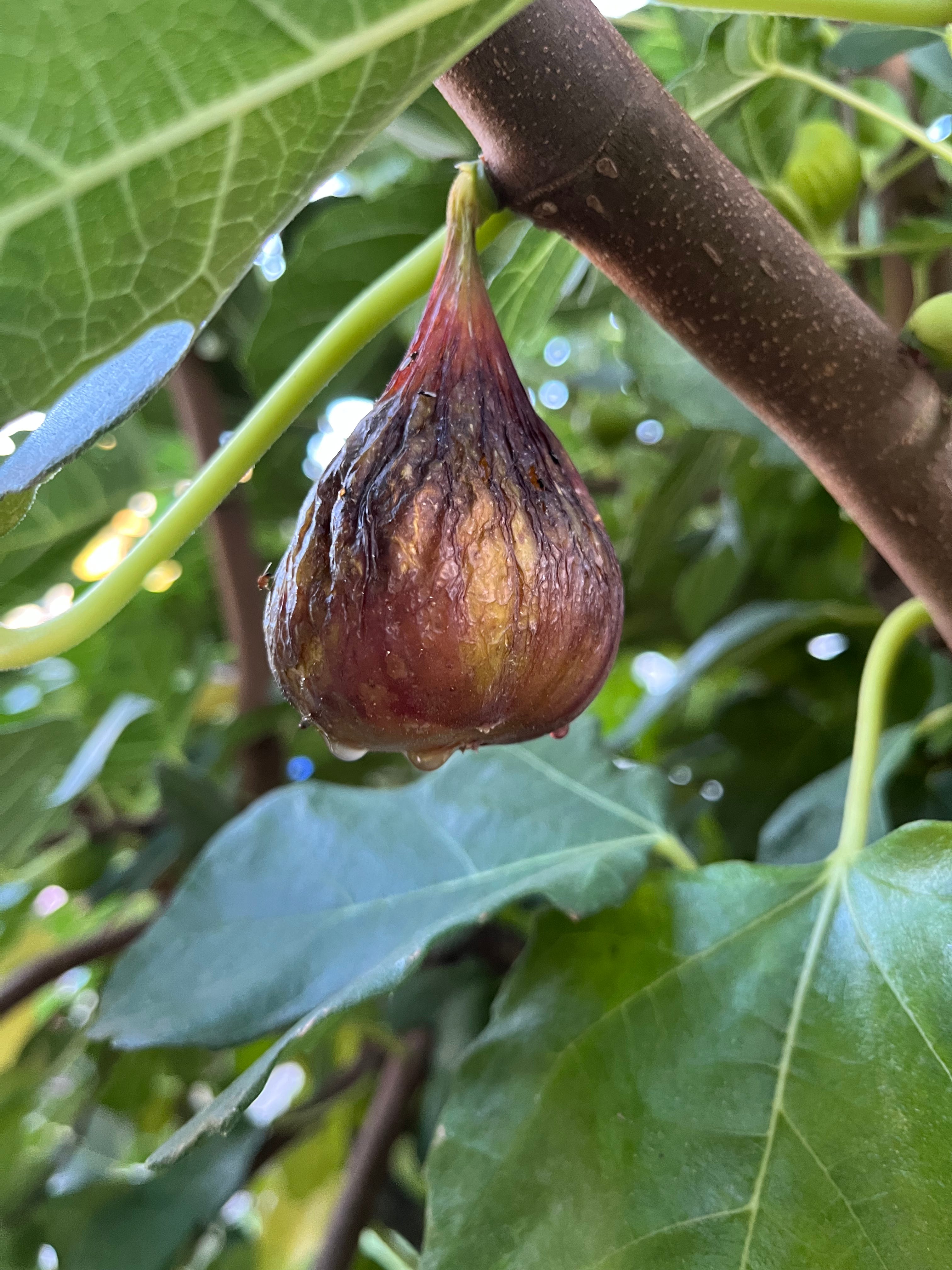
My sense of awe and wonder at this process was often punctuated by a coming and going of fear and revulsion. A keen desire for avoidance, at times, due to my unease around insects. A dead earwig tucked into a leaf offered safer ground for contemplation than the spider strung between the tree and my front door did. When I first spotted its web smattered with fruit flies, red hot fear pricked behind my ears as I forced myself to sit with the arachnid in front of me. To look beyond my irrational fear-based response to a spider which was no bigger than my thumbnail. I realized, as unease bubbled in my chest, if I were a spider I’d easily set up camp there too. Just like how the figs were sites of nourishment and abundance to the earwigs, the fruit flies, and I alike, so too did it’s presence offer the same for the spider.
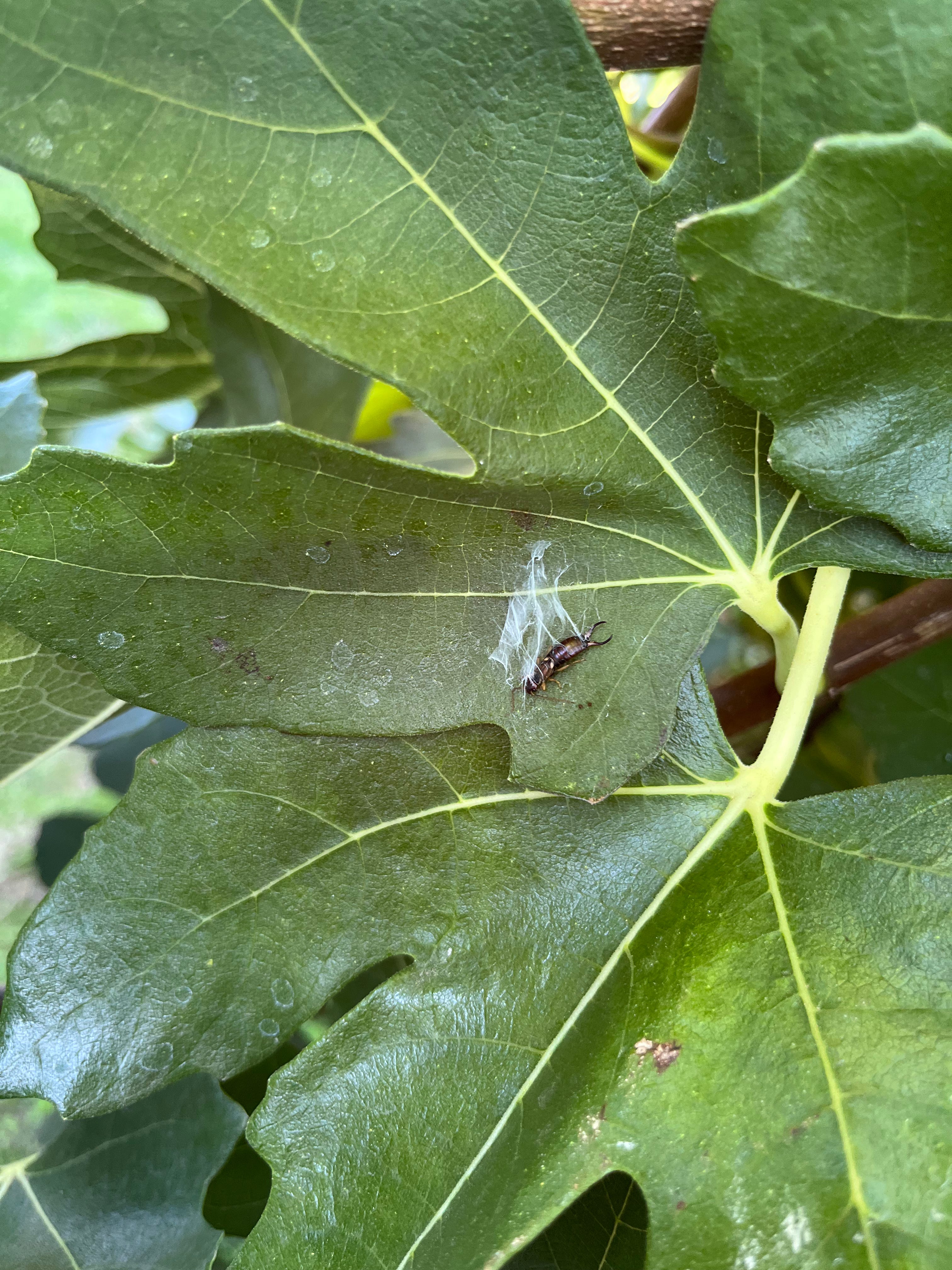
The strength of our sociopolitical order in which we are currently reckoning with the decay of, relies on the notion of theatricality to reaffirm it’s power. This larger than life quality is effective at posturing a faux absolute nature. That it’s performance is so grand, so encompassing, and so inevitable there’s nothing anyone can do to subvert it. This is untrue. As we watch these increased assertions of state violence, what we believed to be our inalienable rights be stripped away, and our reality be reconstructed in order to bastardize our shared humanity; our helplessness is force fed to us. Our current moment is imploring us to acknowledge the rot that has been fermenting for centuries. To see if we can hash out something more nourishing than laboring away until death, as only certain people are afforded the ease of that effort. As this reality of the ultra wealthy Christian nationalist droops under the weight of it’s own casualties, where can you set your web up to catch the most flies?
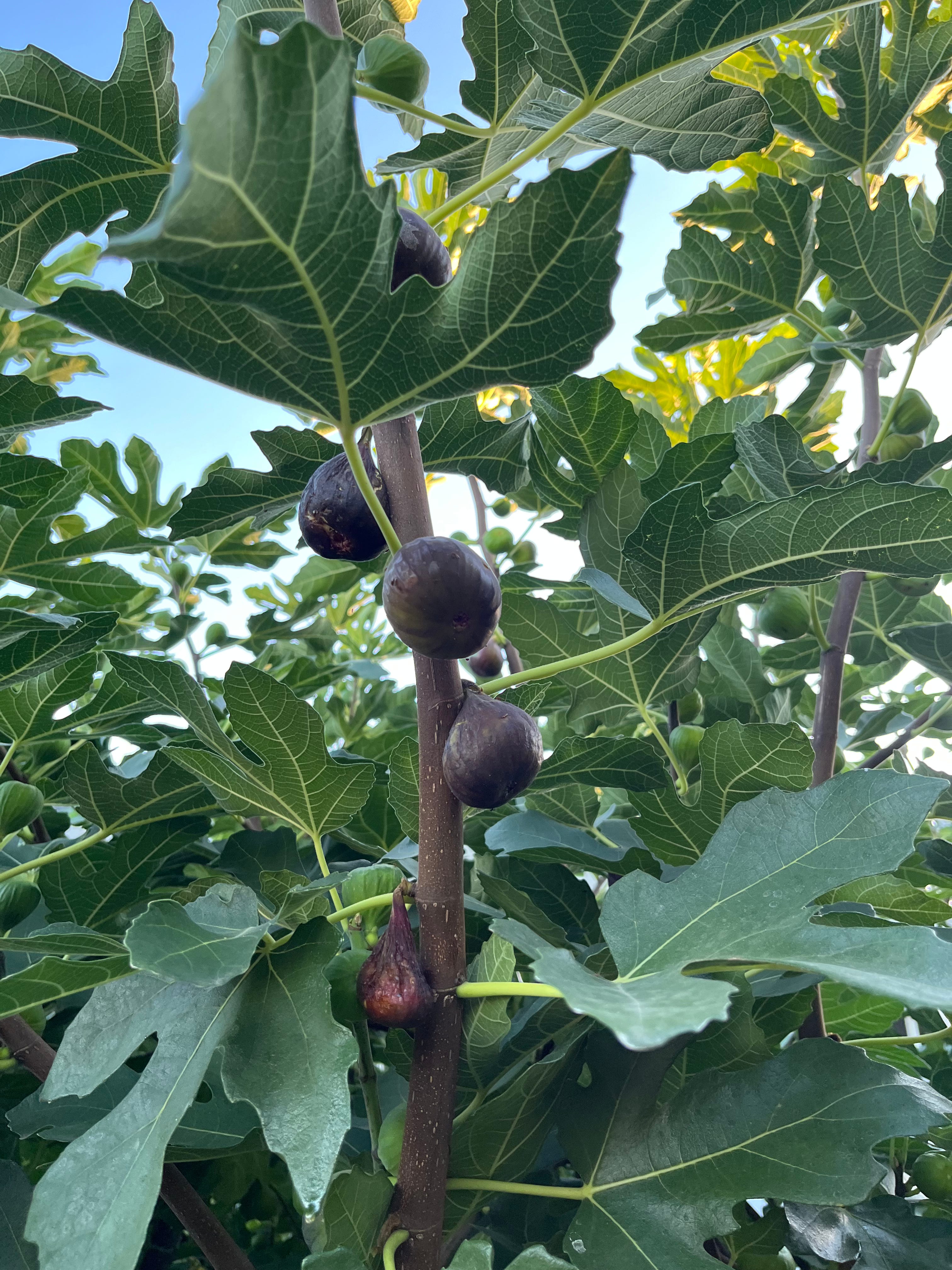
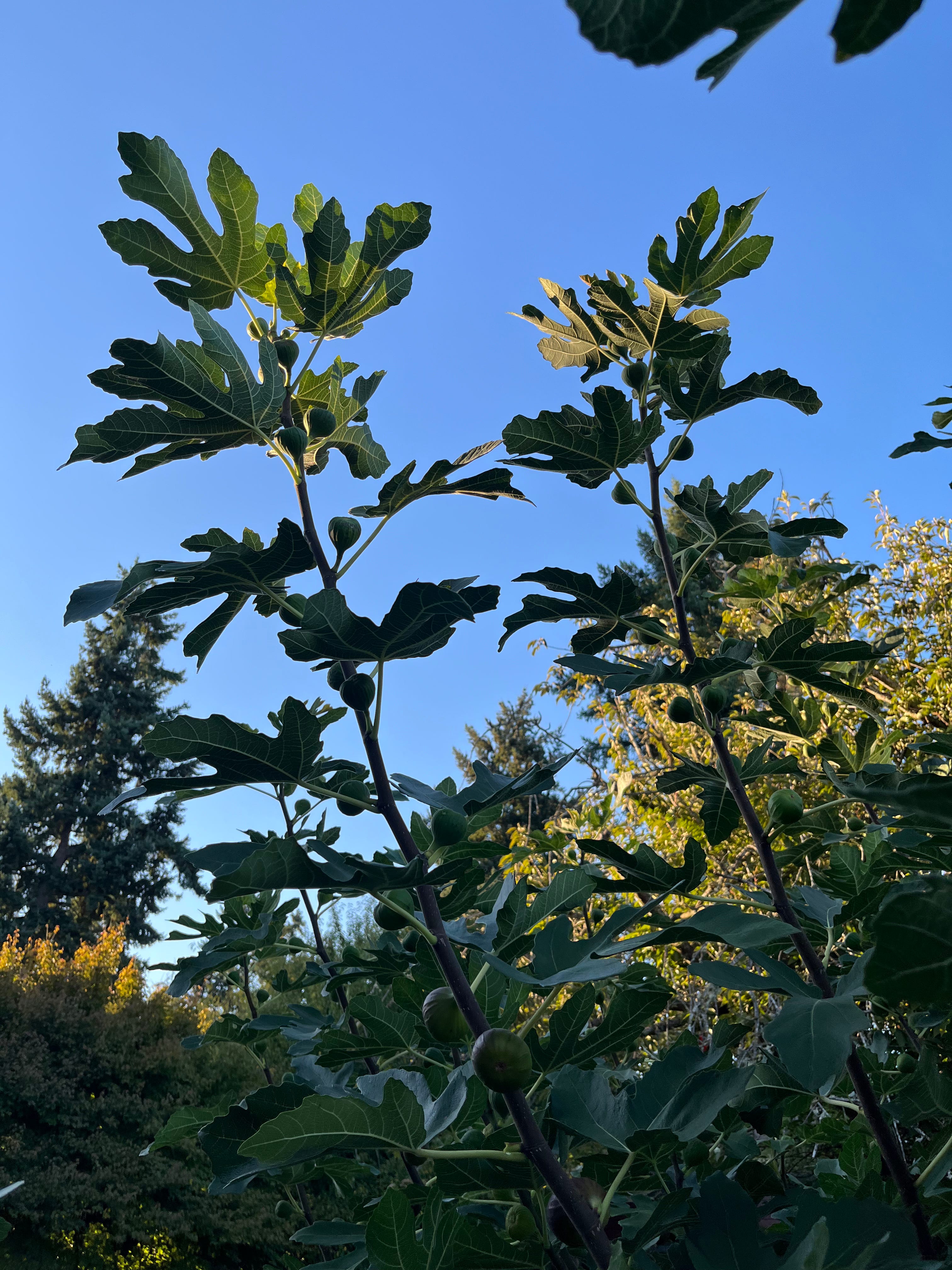
It’s a peculiar thing hearing the rapturous, excited squaking of birds punctuated by the gong of their bodies striking against glass from another room while trying to write. I paused the task at hand, waiting for the commotion to die down to no avail, and I was pulled to the fig tree once more. A group of brown and white spotted birds flew off in a hurry when I came into view. Others though, were still nosily severing and macerating figs with their razor sharp beaks in the bowels of the tree. Shock devolved into fear as more and more birds devoured their fill. Even though more more speckled bodies soared away, the ruckus didn’t die down. Was there going to be any fruit left at all? When the last few flitted away along their way, bellies full, I was in awe to see even ripe fruit were still left unscathed by their frenzy. The following morning, even more little bright green buds adorned the branches.
The global rise in fascism is indicative of the decomposition of the former social order. Our understanding of what a good life looks like, who deserves to live that life, and who can even be considered a human at all is morphing. The previous stringent understandings of gender are falling to the wayside. Race as a construct offers little lived benefit to people unlike it used to. Genocides and their death tolls are no longer as easily hidden from the masses. Within the core of the United States’ imperial structure, this decay has been more violently apparent across social identity lines than ever before. The current administration seeks to try to reaffirm the positionality of ultra wealthy white cishet men through the slashing of governmental programs, obfuscation of history, the starving of its people, and propagation of illness. Through the dehumanization and disappearing of Latino immigrants and the budding normalization of the denial of citizenship status to Black and brown people as ICE expands it’s nexus of violence. Ultimately, as we continue to experience the decay in the defining power of the white supremacist ontology, it’s crucial to remember the nonsensical preoccupations of fascist regimes co-opt the human impulse to make rational sense of the world around us in order to stay safe. When our notion of reality, our personhood, and access to resources becomes threatened, when we have no tools to tap into the poignant truth that as human beings world (re)construction is our power as animals, we fall into the pit trap of a predetermined “normality” as offering us the most access to humanity. We’ve been conditioned to try to cultivate a sense of safety among chaos by keeping everything we have close to our chests. To hoard more resources than we could never need in the name of safekeeping our person. We negotiate who deserves homes, who deserves to eat, and who deserves freedom as we witness human rights be stripped away from one another. The scarcity is false. There is more than enough for everyone.
It’s incredibly human to flinch away from decay, rot, viscera. It forces us to reconcile with disconcerting truths about our own mortality. About the foul contents that actually make up our person. As we are faced with humanitarian atrocities every day we are bound to shield our eyes at some point. It’s natural. But what would happen if we cracked open our fingers for just a sliver of light, and braved the truth of the foulness which has now accumulated to such profound proportions that it leaks through every seam it can?
When you can utilize something in a new way—particularly within a system which is built upon the insistence that everything around us is stagnant—there’s power there. Rot is inevitable, Change is inevitable. But it’s not immutable. You must get curious and push the envelope of what you can do in your sphere of control. You must find the wiggle room for a just, righteous future when it’s purported our current reality is the only one we have until death. What if the decrepit nature of reality offered enough of an entry point where your imagination could see how to use the savable flesh and create something new? It’ll be different. It might not be perfect. You’ll never know unless you can brave a look. What is it that makes looking at it worth it for you?